
Industrial
Surface
preparation
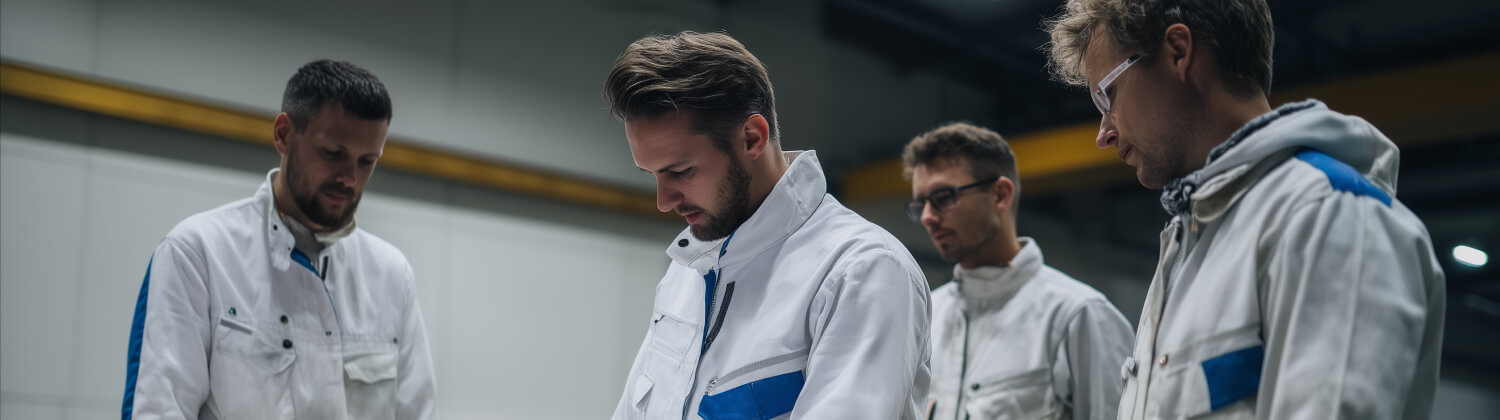
Professional surface preparation is the key to reliable adhesion and long-lasting corrosion protection - in accordance with international standards.

Preparation for maximum performance
The success of any coating begins with surface preparation. Without defined cleanliness, suitable roughness and residue-free substrates, even the best system is only a compromise solution.
Proven, standard-compliant processes ensure that substrates are optimally prepared for the subsequent coating structure.
The right preparation reduces the risk of adhesion problems, corrosion and premature failure. Documented process steps create transparency and traceability - from initial degreasing to final approval.
Preparation
Processes
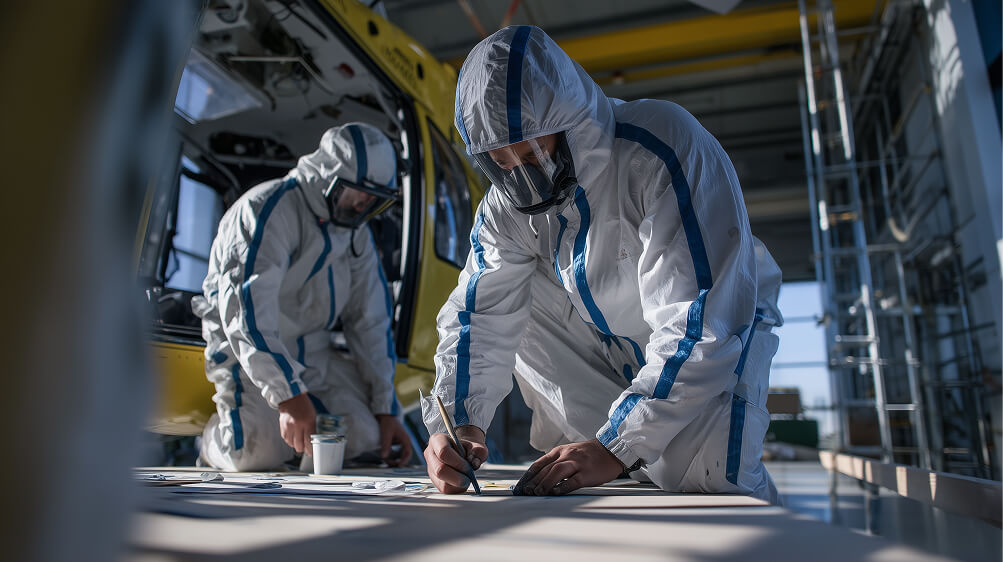
From rough cleaning to micro-roughness: the right method for every project.
Surfaces are prepared in a targeted manner using modern blasting methods such as compressed air, wheel blasting or wet blasting. The degree of abrasion and surface roughness are precisely controlled and documented according to Sa and Rz specifications. The result is a surface free of rust, scale or old material, with a defined micro-roughness as the ideal basis for subsequent coatings. Different blasting media and parameters are selected according to the material and requirements. The degrees of purity and roughness achieved comply with international standards such as ISO 8501-1 and 8503.
Blasting according to international standards
Blasting removes corrosion products, old coatings and creates the defined roughness for maximum adhesion.
Complete removal of oils, grease and particles is essential for the performance of any coating. Coordinated chemical and physical cleaning processes ensure absolute substrate cleanliness. Depending on the material and load profile, solvents, aqueous systems or alkaline cleaners are used. The effectiveness of the cleaning is regularly checked and documented using test methods such as the water wetting or wipe test. This ensures that subsequent layers can be applied without any loss of adhesion.
Degreasing & dry cleaning
Residue-free degreasing removes oil, grease and other impurities as a prerequisite for stable adhesion.
Surface activation & passivation
Targeted activation or passivation increases adhesion or prevents uncontrolled reactions on the substrate surface.
Residual dirt & dust control
Measurable control and removal of particles, residual dirt and dust prevent defects and inclusions.
Documentation & process monitoring
Seamless recording of all preparation processes creates traceability and process reliability.

Unsere Oberflächenschutz-Verfahren im Detail
Seit der Gründung im Jahr 2000 durch Ismail Giourouk steht unser Unternehmen für Qualität ohne Kompromisse. Heute führen seine Söhne Moustafa und Chousein das Unternehmen mit derselben Hingabe weiter. Wir tragen diese Erfahrung in die Zukunft und erweitern unser Angebot für unterschiedliche Branchen – mit bewährtem Handwerk und innovativer Technologie.
- Quality: Kompromisslose Standards bei Material und Verarbeitung.
- Zuverlässigkeit: Termine einhalten und Erwartungen konsequent übertreffen.
- Familie: Eine Unternehmenskultur aus Respekt und gegenseitiger Unterstützung.
Unser bewährter Beschichtungs-
prozess in vier Schritten
Unser Spezialistenteam arbeitet mit modernen Verfahren und Materialien für ein technisch und optisch einwandfreies Ergebnis.
Analyse des Ist-Zustands und der Umgebungsbedingungen für eine optimale Leistung der Beschichtung.
01
Analyse des Ist-Zustands und der Umgebungsbedingungen für eine optimale Leistung der Beschichtung.
Auswahl von Beschichtungssystemen und Spezifikationen, abgestimmt auf die Anforderungen Ihres Projekts.
02
Auswahl von Beschichtungssystemen und Spezifikationen, abgestimmt auf die Anforderungen Ihres Projekts.
Ausführung durch qualifizierte Fachteams mit konsequenter Qualitätskontrolle während des gesamten Prozesses.
03
Ausführung durch qualifizierte Fachteams mit konsequenter Qualitätskontrolle während des gesamten Prozesses.
Abnahme mit Prüfprotokoll und Dokumentation sowie Empfehlungen für Inspektion und Wartung.
04
Abnahme mit Prüfprotokoll und Dokumentation sowie Empfehlungen für Inspektion und Wartung.
Häufige Fragen zur Oberflächenvorbereitung
Was Einkäufer und Projektleiter vor dem Strahlen und Beschichten am häufigsten wissen wollen.
Wir beraten Sie unverbindlich zu Ihrem Projekt – persönlich und fachkundig.
Projekt anfragen+49 (0)40 756 667 32Für die meisten Korrosionsschutzsysteme auf Stahl ist Sa 2½ nach DIN EN ISO 8501-1 der Standard. Sa 3 wird bei besonders hoch belasteten Bauteilen oder Spezialsystemen gefordert. Welcher Grad nötig ist, ergibt sich aus mehreren Faktoren:
- das vorgesehene Beschichtungssystem
- die Korrosivitätskategorie der Umgebung
- die Vorgaben des Beschichtungsherstellers
Wir legen den passenden Reinheitsgrad gemeinsam mit Ihnen anhand des Systemdatenblatts fest und dokumentieren ihn vor der Applikation.
Ja, die Oberflächenvorbereitung ist in der Halle oder direkt beim Kunden möglich. Je nach Bauteil und Umgebung arbeiten wir etwa in der Werft, auf der Baustelle oder in laufenden Anlagen. Damit der Einsatz vor Ort reibungslos verläuft, stimmen wir vorab ab:
- Einhausung und Absaugung
- Arbeitszeiten, damit der Betrieb möglichst wenig beeinträchtigt wird
- Anforderungen an Arbeits- und Umweltschutz
Die Rauheit wird auf das nachfolgende Beschichtungssystem abgestimmt, damit die Haftung optimal ist. Geprüft wird das Rauheitsprofil nach DIN EN ISO 8503, zum Beispiel mit Vergleichsmustern oder Messgeräten. Die Ergebnisse halten wir im Prüfprotokoll fest.
So ist für Sie und Ihre Auftraggeber jederzeit nachvollziehbar, dass der Untergrund die Vorgaben erfüllt.
Verbrauchtes Strahlmittel und abgetragene Altbeschichtungen werden getrennt erfasst und fachgerecht entsorgt. Besondere Sorgfalt gilt bei schadstoffhaltigen Altanstrichen, zum Beispiel mit Blei oder Teer. Hier gehen wir so vor:
- Schutzmaßnahmen werden vor Projektbeginn geplant
- Entsorgungswege werden vorab festgelegt
- die Entsorgungsnachweise erhalten Sie mit der Projektdokumentation

PERSONAL PROJECT CONSULTING
Let us develop the optimum coating strategy for your requirements together - competently and without obligation.
Contact us
Coater GmbH
Georgswerder Bogen 7
21109 Hamburg - DE
FAQS
Compact answers to the most frequently asked questions about COATER services, project management and quality assurance.